Transparent automatic mode
Names are securely randomized onto duck IDs and never influence the physics. There is no preset winner or name-based boost; the simulated course produces the finishing order.
3D duck race name picker
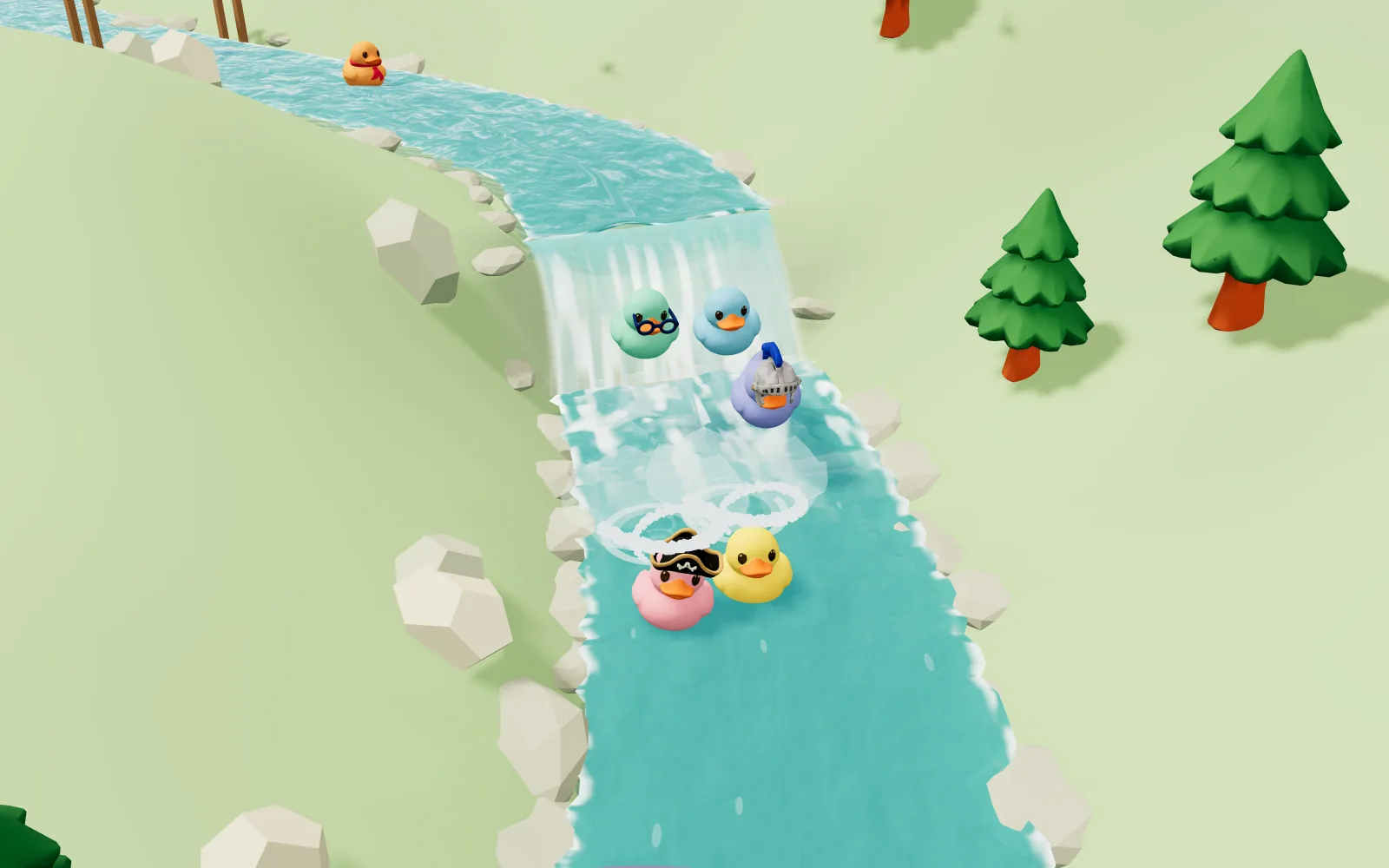
Enter 2–12 names in seconds—no account and no name upload. Then watch rapids, collisions, obstacles, and waterfalls produce the actual finishing order.
How it works
Paste 2–12 unique names. There is no account and no built-in endpoint that uploads the list.
Secure random assignment puts names on ducks; rapids, bends, collisions, obstacles, and waterfalls create the race.
Automatic mode has no preset winner. The finish line records every duck, and you can copy the complete ranking.
Race rules
Names are securely randomized onto duck IDs and never influence the physics. There is no preset winner or name-based boost; the simulated course produces the finishing order.
The public version accepts no player input that can steer a duck or change the outcome. Following a duck changes only the camera.
Automatic mode separates secure name assignment from race physics and exposes the real full ranking. It is transparent casual selection, not a certified draw or proof of identical physical odds on every course.
Duck Rush has no account, remote name database, built-in name-upload API, or configured analytics destination. Names and the last 10 results stay in this browser, and the public build does not request microphone access.
Help
Each race supports 2–12 unique names. This version is not designed for whole-school or thousand-person draws.
The public version is automatic-only. The browser’s secure random source assigns names to ducks, there is no preset winner or name-based physics, and the simulated course determines the actual finish. Duck Rush is not an independently certified draw.
Not by Duck Rush’s built-in code. There is no account, name-upload API, remote name database, or configured analytics destination; names and recent history stay in this browser by default.
No. Names are randomly assigned to physical duck IDs, then the current river simulation produces the actual finishing order.
The course has changing flow, bends, narrow sections, waterfalls, obstacles, and duck collisions. Those simulated interactions can change positions throughout the race.
The track and seed URL parameters reproduce course choices and generated mountain geometry. They are page state, not separate indexable pages.